
 繁體中文
繁體中文  English
  Español de México
  Français
  Português do Brasil

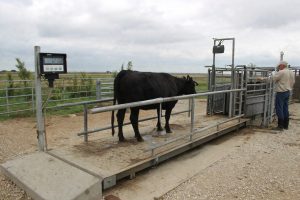
If you weigh the same cow twice and get two different numbers. Now you don’t know which one is right. That’s a serious problem. Wrong weights lead to wrong medication doses, wrong selling prices, and bad breeding records.
A failing cattle scale doesn’t just frustrate you. It quietly damages your operation every single day. If your livestock scales are giving you trouble, this guide will show you exactly when to stop repairing and start replacing. Browse our full range of farm scales and 農業設備 to see what a solid setup looks like.
目錄
切換This is the most common complaint with livestock scales that cattle farmers rely on daily. You weigh the same animal twice. The numbers don’t match. You weigh it again and again, but you get different readings. Now what? An inaccurate cattle scale breaks your records.
The problem is almost always your load cells or junction box. Load cells are the sensors that measure weight. When they wear out or get wet, they send bad signals to your digital indicator. The indicator shows whatever it receives.
Cattle scale calibration issues are common, but calibration only fixes a scale that reads consistently wrong.. It cannot fix a scale that reads randomly wrong. If your weight drift comes back hours after calibrating, the hardware is broken. Stop calibrating and start inspecting.
A little surface rust is normal on any cattle scale platform. Deep rust that eats into the steel frame is not normal. When the heavy-duty structural steel corrodes deeply, the platform flexes. That flex throws off every reading.
Check the underside of your platform. If the steel flakes, feels soft, or has deep pitting. That’s a replacement job. Corrosive environments like wet lots and manure-heavy yards speed this damage up fast.
Replacing one load cell is normal maintenance. Replacing them every few months is a warning sign.
The shear beam under your platform may be passing an uneven force called shock loading onto the cells. You can keep replacing cells, but the root problem stays. And the cost to replace cattle scale load cells adds up fast when the real issue is the frame itself.
| Situation | What To Do |
| One load cell failed; the scale is under 5 years old | Repair it |
| Multiple load cells are failing repeatedly | Investigate, likely replace |
| Wiring harness corroded + indicator failing | Full replacement |
| Scale over 10 years old with recurring issues | Livestock scale replacement is the right call |
| The platform frame is structurally damaged | Replace immediately |
Zeroing out should take seconds. If your scale drifts back after you zero it or won’t zero at all, something inside is broken.
The wiring harness connects your load cells to the indicator. When it cracks or corrodes, it bleeds a signal. The scale never gets a clean zero because it’s receiving electrical noise.
Sometimes the digital indicator has internal board damage. It resets randomly, shows error codes, or loses settings after power cuts. You can replace just the indicator, but always test your load cells first.
If you sell cattle by weight, NTEP-certified equipment matters. It’s a legal requirement in many states. An old scale that never met this standard, or drifted outside. Its accuracy tolerance puts your sales records at risk.
This is one problem that calibration cannot fix. You need a certified livestock weighing scale. That means an upgrade, not a repair.
The animal scales bought for calves can’t handle mature bulls. Running a scale past its weight limit causes platforms to crack and load cells to burn out fast.
Portable livestock scales and other scales for livestock are flexible and useful. But make sure the weight rating covers your heaviest animals. If your scale has been overloaded regularly, replacement is a safety issue.
Not every problem means you need a new scale. If your scale is under five years old and one load cell failed, repair is probably the right move. A good technician can do cattle scale troubleshooting in about an hour and tell you exactly what’s wrong.
But here’s what most sellers won’t tell you: if you’ve repaired the same scale twice already and it still reads badly. Then replace the cattle scale. Stop patching it.
Rust that has reached the structural frame cannot be fixed. And a scale that fails during a critical weighing. Like pre-sale day or medication time. It will hurt you far more than a new livestock scale ever would.
Your cattle weighing scales drive your medication doses, selling weights, and breeding records. Knowing when to buy a new cattle scale is just as important as knowing how to use one.
Do these three things right now. First, weigh the same animal three times. If the numbers vary beyond your scale’s accuracy tolerance, that’s your answer. Second, inspect the platform frame for deep rust and damaged load cell mounts. Third, count how many times you’ve called a repair technician in the last 12 months.
If the answer is more than twice, it’s time to seriously upgrade your livestock scale. If you’re ready to upgrade, the Prime Scales PS-4KCS is one of the best cattle scales built for real farm conditions and comes with a reliable indicator.
Your load cells or junction box are likely damaged. Moisture and corrosion cause random signal errors. Calibration won’t fix this. The hardware needs a physical inspection. If multiple parts are failing, replacement is usually smarter than repeated repairs.
Most electronic livestock scales last 8–15 years with good maintenance. Heavy daily use, wet environments, and poor drainage shorten that. Scales in harsh conditions often need serious attention or full replacement.
A damaged wiring harness, failing load cell, or loose junction box connection causes fluctuation. Check all connections first. Then test each load cell individually before deciding if the whole system needs replacing.
Yes, if the platform frame and digital indicator are still in good shape. But if the structural steel is corroded or several components are failing at once, a full replacement is more reliable and makes more sense long-term.
Calibration fixes a scale that reads consistently high or low. If your scale reads differently every time or drifts after zeroing. That’s a hardware failure. No amount of calibration will fix broken load cells. Get a technician to test the components first.

注册后即可收到最新信息、促销活动和即将上市产品的抢先预览。此外,下次订购还可享受 20% 优惠。