


Most farmers know when an animal looks thin. But “looks thin” is not a number. Without a number, you are guessing on feed rations, medication doses, and sale timing. That guessing costs real money, and in some cases, it costs animals. Poor herd weight tracking is one of the most overlooked problems on working farms today.
The right livestock weighing system fixes this. It gives you a real number, consistently, without the stress of manual handling. This guide covers how these systems work, which type fits your farm, and what no one tells you before you buy. You can also browse our full range of agricultural weighing equipment to find the best fit for you.
Table of Contents
ToggleWeight is the most useful number in animal management. It tells you whether a calf is growing on track, whether a sheep is losing condition before you can see it, and exactly when an animal is ready for market.
Inaccurate livestock weight readings create a chain reaction. Wrong weight means wrong feed allocation. Wrong feed allocation means poor feed efficiency. Poor feed efficiency means higher costs and slower growth, which hits revenue directly at the sale time.
Regular weighing catches illness early. An animal dropping 5 kg over two weeks without explanation is showing a problem before any visual symptom appears. Farms relying on visual checks alone typically catch health issues weeks later. When treatment is harder and more expensive.
Animal monitoring systems built on consistent weight data give you a trend, not just a snapshot. A single reading is useful. A series of readings over time is a proper livestock health management tool.
Feed management is the highest controllable cost on most livestock farms. Exact weights mean precise ratios. Overfeeding costs money. Underfeeding slows growth. Farms using regular, accurate weighing consistently report better feed efficiency ratios. Because the data makes waste visible and livestock productivity measurable.
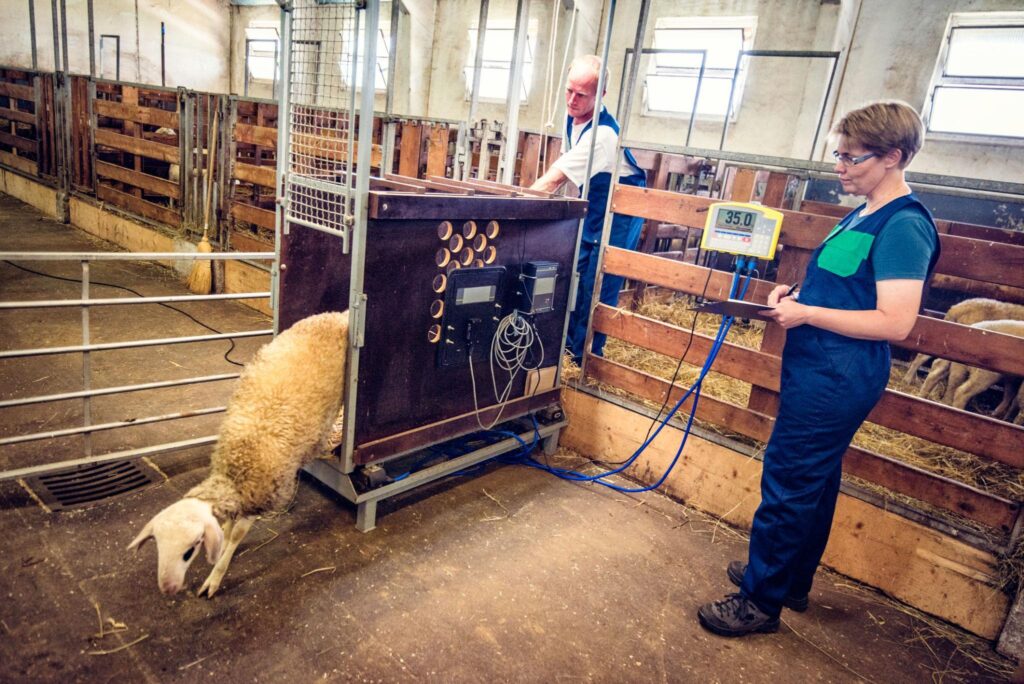
The animal enters a crush or crate, and the animal weighing platform beneath records the weight. Reliable and straightforward for routine weighing during handling days.
A weigh bar system places load bars under an existing structure that includes a crate, feed trough, or custom frame. Your existing equipment becomes the scale.
Animals step over an embedded platform during normal movement. The electronic weighing system records weight automatically
Digital livestock scales in portable format move between paddocks, set up on any flat surface, and run on battery power.
Every load cell weighing system uses sensors that convert physical pressure into an electrical signal. Most quality agricultural scales use multiple load cells to average the reading. One damaged or corroded cell throws off the entire measurement.
Outdoors, this matters more than anywhere. Mud, moisture, and animal contact are daily realities. Livestock weight measurement solutions built for field use need load cells rated for outdoor conditions.
The digital weight indicator is the display and control unit. Basic models show a number. Advanced units connect to farm management software, store individual animal records by EID tag, and flag animals outside target weight ranges automatically.
A good digital measurement system eliminates manual data entry. Weight is captured, tagged to the animal, and stored without anyone writing anything down. For operations managing hundreds of animals, that is a necessity.
High labour effort in animal weighing is one of the biggest frustrations on working farms. Moving animals to a fixed scale, recording weights manually, and managing data on paper takes hours that most farm teams do not have.
Livestock tracking systems combining EID ear tags with walk-over scales weigh every animal daily without extra labour. The slow livestock weighing process that drains staff time on traditional setups is removed entirely. Alerts flag animals that drop below target weight, gain too slowly, or show sudden changes suggesting illness.
Weight monitoring systems integrated with feeding equipment take this further. When scale data feeds directly into a feed management system, rations adjust automatically based on current weight. This is where farm automation delivers real return on investment.
For large commercial operations, a standalone crush scale is not enough. The volume of animals, the frequency of weighing needed, and the data management requirements all point toward one solution. Walk-over weighing integrated with EID tagging and farm management software.
Cattle management systems at this scale need to weigh animals without disrupting daily movement. Every animal is weighed during normal movement. Data is captured automatically. Nothing is written down manually. The lack of farm data integration that plagues smaller setups simply does not exist when the system is properly configured.
The farm animal weighing technology market has expanded significantly. More options mean more room for the wrong purchase. Here is what actually matters.
Cheap load cells fail outdoors. A scale performing well in a barn gives inconsistent readings when temperature swings or moisture enter the housing. Buy equipment rated for your actual environment.
Walk-over systems require animal training. Animals do not instinctively walk calmly over an unfamiliar platform. Expect several weeks before your data is reliable. Farmers who skip this report have inconsistent early readings and sometimes abandon the system entirely.
Data integration is only useful if you use it. The lack of farm data integration is a real problem, but so is buying a system with software features nobody opens. A simple indicator with good accuracy often outperforms a complex system that is never properly configured.
The equipment is only half the answer. A scale used twice a year gives two data points. A weekly scale provides a growth curve. The habit matters as much as the hardware.
| Feature | Crush/Crate Scale | Weigh Bar System | Walk-Over Scale | Portable Scale |
| Animal Handling Required | Yes | Yes | No | Yes |
| Best For | Cattle, sheep | Cattle, pigs | Large herds | Small/mixed farms |
| Installation | Simple | Moderate | Professional | None |
| Data Integration | Optional | Optional | Yes | Optional |
| Outdoor Durability | Good | Excellent | Excellent | Moderate |
| Labour Required | Medium | Medium | Low | Medium |
Choosing the right farm weighing system is about matching equipment to your animals, your workflow, and your farm size. The wrong choice means unreliable data, equipment that fails outdoors, and a system your staff stops using within months.
Three steps before you buy. First, identify your primary animal type and whether you need individual animal records or herd averages. This determines whether EID integration is necessary. Second, assess your environment honestly; whether it’s wet or muddy conditions, load cell weatherproofing is non-negotiable. Third, decide whether data needs to flow into farm management software or whether a standalone display is enough for your operation right now.
Explore our livestock scales and agricultural weighing equipment to find the system that fits your farm, your herd, and your management goals.
Quality systems with calibrated load cells are accurate to within 0.1–0.5 kg under normal conditions. Accuracy drops on uneven ground or with damaged load cells. Regular calibration keep readings reliable long term.
Yes. Exact weights mean precise ratios. Overfeeding and underfeeding show up in the data immediately. Most farms see measurable improvement in feed conversion ratios within one full production cycle of consistent weighing.
Crush and crate scales work across all three. For large cattle herds, walk-over systems reduce handling stress significantly. For small mixed farms, a portable digital scale is usually the most practical and affordable starting point.
Consistent records create a weight trend. An animal losing weight without explanation flags a problem weeks before physical symptoms appear. Earlier detection means faster, cheaper treatment and better overall herd outcomes.
Electronic systems with load cell platforms, digital indicators, and software integration are the current standard. The best choice depends on herd size, animal type, and how much automation your operation can realistically maintain day to day.
Sign up to receive updates, promotions, and sneak peaks of upcoming products. Plus 20% off your next order.